I'm Logging Off Forever (See You Next Tuesday): The Gen Z Creator Retirement Announcement Nobody Takes Seriously Anymore
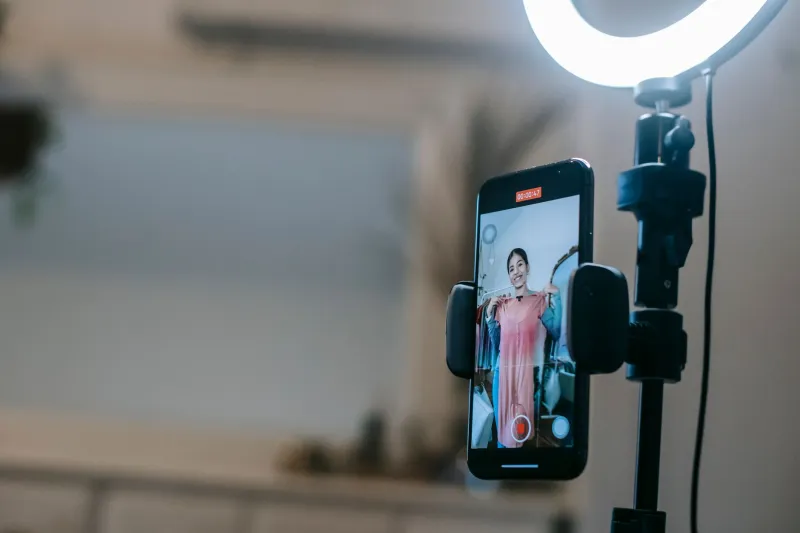
The video always starts the same way. Soft lighting. Maybe a cozy background — a blanket, a candle, something that says "I'm being vulnerable right now." The creator sits close to the camera, looking tired in a way that feels carefully composed, and then delivers the news that they've been building toward for the entire runtime: they're done. Burnt out. Stepping away. They need to "protect their peace" and "prioritize their mental health," and this time — this time — they really mean it.
The comments flood in. "We'll miss you." "Take all the time you need." "Your mental health comes first, always." And somewhere in the replies, buried under the supportive messages, are the people who've seen this movie before: "See you in three weeks." "Can't wait for the comeback video." "This is literally just content."
They're not wrong.
The Anatomy of a Creator Retirement
The TikTok-and-YouTube generation has developed what is now a fully recognizable content format: the dramatic departure announcement. It has its own structure, its own visual language, its own emotional beats. And at this point, audiences — particularly the Gen Z viewers who grew up watching these creators — can clock the format from the first ten seconds.
Step one: the vague "I've been going through a lot" posts. Cryptic captions, reduced posting frequency, maybe a Story that just says "taking a moment." This is the teaser phase, whether intentional or not.
Step two: the announcement video. Long, personal, often emotional. Usually framed around burnout, mental health, or a vague sense that the internet has become "too much." Specific enough to feel real, broad enough to avoid committing to anything concrete.
Step three: the silence. This lasts anywhere from four days to, in exceptional cases, two months. During this time, the creator's name trends periodically as fans speculate about their return.
Step four: the comeback. Sometimes it's a new video that simply appears with no explanation. Sometimes it's a "I'm back and I have a lot to tell you" post. Occasionally it's timed to a brand deal, a new project, or a moment when the creator's metrics needed a jolt of engagement. The return almost always performs better than anything they posted before they left.
This is not a coincidence.
The Attention Economy Made Quitting Into a Power Move
Here's the uncomfortable truth that everyone in the creator space understands but very few will say publicly: disappearing is one of the most effective engagement strategies available to a social media personality. Absence creates demand. Silence generates speculation. And a return — framed correctly — gets treated with the kind of breathless coverage usually reserved for actual news events.
The attention economy runs on scarcity, and for creators who post constantly, the scarcest thing they can offer is themselves not posting. A "retirement" announcement, whether genuinely felt or strategically timed, functions as a reset button. It clears the content slate, reminds the audience that this person exists and matters, and builds anticipation for whatever comes next.
This doesn't mean every creator who announces a break is being cynical. Burnout is real, and the pressure on young people who built careers on constant self-documentation is genuinely brutal. But the format has been used so many times — and the returns have been so reliably well-timed — that audiences have stopped taking the announcements at face value, and honestly, who can blame them?
The Credibility Problem
The real casualty of the retirement fake-out cycle isn't engagement — creators almost always bounce back, numbers intact. The casualty is trust, specifically the parasocial trust that the creator-audience relationship is built on.
Young audiences, who are generally more media-literate than they get credit for, are increasingly vocal about the pattern. TikTok comment sections on retirement videos now routinely feature fans essentially live-annotating the performance in real time. "Already got the comeback thumbnail ready." "The brand deal is loading." "This is the most viewed thing they've posted in months — funny how that works."
When a creator's most authentic-seeming moment — a raw, emotional declaration that they're stepping away from it all — gets met with skepticism and light mockery, something has broken. The audience hasn't become cruel. They've become calibrated. They've watched this enough times to recognize the shape of it, and they're no longer willing to perform the emotional response the format is designed to generate.
That's a harder problem to solve than a dip in followers.
When It's Actually Real
To be fair, not every announced break is a content play. Some creators do genuinely step back and don't return — or return on their own terms, months or years later, without the fanfare of a comeback arc. And the mental health pressures on young, constantly online creators are real enough that dismissing every announcement as calculated would be its own kind of cynicism.
The issue is that the format has been so thoroughly colonized by strategic use that it's nearly impossible for audiences to distinguish genuine need from engineered absence. A creator who is actually struggling and actually needs to step away gets lumped in with the ones who are running a content strategy, because the videos look identical. That's not fair to anyone.
The solution, if there is one, isn't to stop taking breaks. It's to stop announcing them like they're album drops.
What Comes Next
The retirement fake-out has peaked as a format — which usually means it's about to evolve rather than disappear. Watch for the next iteration: creators who lean into the self-awareness, openly acknowledging the pattern while doing it anyway. "I know everyone thinks this is a bit," one creator posted recently before a break, "but I genuinely need this." The comment section, predictably, treated it as a bit.
At some point, the only way to make a retirement announcement believable is to not make one at all — just leave, quietly, without the soft lighting and the carefully composed exhaustion.
But that doesn't get nearly as many views.