The Second Act That Never Came: Hollywood's Selective Memory on Who Deserves Redemption
The Second Act That Never Came: Hollywood's Selective Memory on Who Deserves Redemption
Hollywood has always been a town that runs on narrative. And few narratives are more seductive — or more self-serving — than the redemption arc. Fall from grace, do the work, return triumphant. It's a story the industry knows how to tell, because it's told it before, and because telling it well enough means never having to answer the harder questions underneath it.
But here's what the redemption narrative tends to leave out: not everyone gets one. And the pattern of who does and who doesn't reveals something deeply uncomfortable about what the industry's post-#MeToo reckoning was actually for.
The Promise That Was Made
When the #MeToo movement broke open in October 2017, beginning with the explosive reporting on Harvey Weinstein by The New York Times and The New Yorker, the industry's initial response was swift — or at least it looked that way. Contracts were terminated. Awards were returned. Statements were issued. The message, amplified across every trade publication and late-night monologue, was that things were going to be different now.
 Photo: The New York Times, via cdn.shopify.com
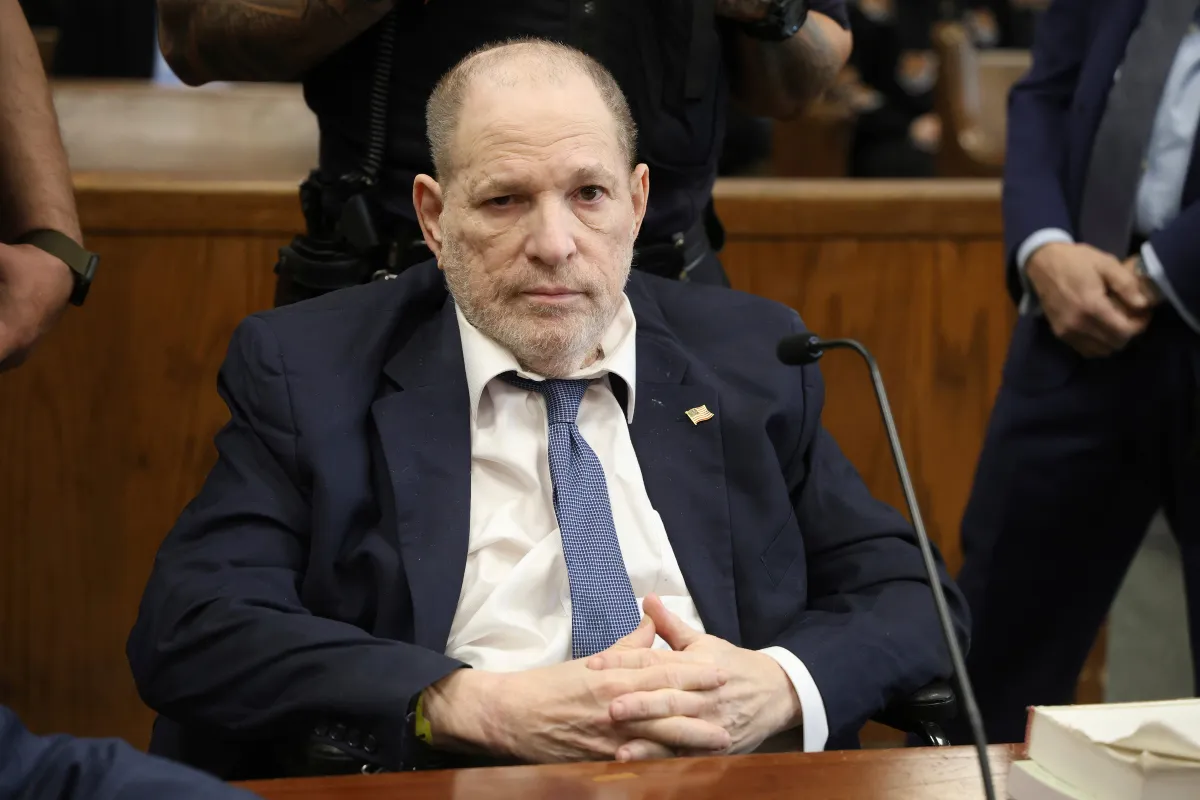 Photo: Harvey Weinstein, via static.independent.co.uk
For many survivors, that moment represented something real. Time's Up, founded in January 2018, raised millions in its early months. Studios pledged to overhaul their HR structures. The conversation about power, access, and abuse in creative industries felt, briefly, like it had genuine institutional weight behind it.
But institutional promises are only as durable as the institutional will to enforce them. And Hollywood's will, as it turns out, has always been highly selective.
The Uneven Math of Accountability
Let's be specific, because generalities are how the industry prefers to discuss this — vague enough to sound accountable, blurry enough to avoid naming anything concrete.
Harvey Weinstein was convicted on rape and sexual assault charges in 2020 and sentenced to 23 years in prison. His second New York conviction was later overturned on procedural grounds by the state's Court of Appeals in 2024, a ruling that sent shockwaves through advocacy circles and prompted immediate outcry from survivors and legal experts alike. He still faces a separate California conviction. His career, by any measure, is over — though his legal saga continues to grind through the courts in ways that have felt, to many watching, like a system that makes justice exhausting on purpose.
Then there are the cases that resolved differently. Men who faced credible allegations, took a brief sabbatical, and returned to work within 18 to 36 months, often with the quiet assistance of the same industry relationships that protected them in the first place. Some came back to standing ovations. Some came back to silence — which, in Hollywood, is its own kind of welcome.
The through-line isn't always the severity of the allegation. It's the size of the name. The value of the IP. The number of people whose livelihoods are attached to the person in question.
The Careers That Simply Weren't There Anymore
On the other side of the ledger are the people who didn't have the leverage to survive the moment — and who, it's worth noting, were disproportionately women and people of color who had spoken out, reported misconduct, or simply been present when something went wrong.
Some of the women who came forward in 2017 and 2018 described, in subsequent interviews and essays, a quiet industry freeze-out that followed. Not a public blacklisting — that would be too visible, too legally precarious. Just a gradual drying up of auditions, meetings that never got scheduled, agents who stopped returning calls. As actress and activist Mira Sorvino, who had spoken about being blacklisted by Weinstein years before #MeToo, told The Guardian, the mechanisms of retaliation don't need to be overt to be effective.
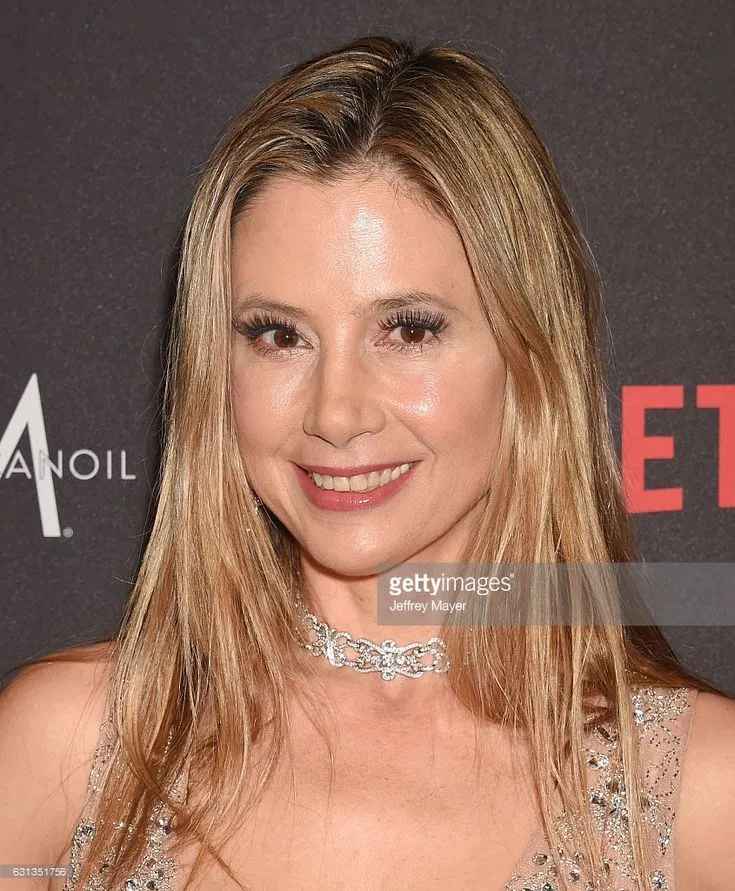 Photo: Mira Sorvino, via i.pinimg.com
Meanwhile, the conversation about accountability quietly shifted. By 2019 and 2020, the dominant industry narrative had moved from "who do we need to hold responsible" to "how do we handle the complexity of these situations" — which is a real question, but one that also happens to be considerably easier to sit with indefinitely without resolving.
The Comeback Architecture
For those who did return, the architecture of the comeback followed a recognizable pattern. A profile in a prestige publication, timed carefully. An interview in which difficult questions were acknowledged but not fully answered, described by the subject as "taking responsibility" in ways that the people they harmed sometimes publicly disputed. A project — usually a film, sometimes a book — that reintroduced them on their own terms.
The industry press, for its part, largely played along. Not out of malice, necessarily, but because the entertainment media ecosystem is structurally dependent on access, and access is controlled by the very people being covered. A publication that asks too hard a question loses the interview. A journalist who pushes too far loses the relationship. The incentives of the coverage machine are not aligned with the interests of accountability.
Insiders who spoke to various trade outlets over the past few years have noted, repeatedly and mostly on background, that the real rehabilitation work happens in private — in dinners, in calls, in the gradual re-extension of professional courtesies that signal to the broader community that someone is, in the industry's parlance, "okay to work with again."
What Justice Actually Looked Like
It would be dishonest to say nothing changed. Consent training became mandatory at major studios. On-set intimacy coordinators became standard practice rather than an exception. Several studios revised their NDAs to explicitly exclude misconduct claims from confidentiality requirements. These are real, structural shifts, and the people who fought for them deserve credit.
But structural shifts and individual accountability are different things. And the gap between the two is where a lot of the most important stories of the past six years have lived — quietly, uncomfortably, without a press release.
The careers that were promised a second chance and never got the call back. The settlements that came with silence clauses. The industry events where the person everyone agreed was problematic three years ago is now back in the room, and nobody's quite sure who decided that was okay, and nobody's asking out loud.
The Story Hollywood Prefers to Tell
Hollywood will always be better at producing redemption narratives than accountability ones. Redemption is cinematic. It has a three-act structure. Someone falls, someone rises, the audience feels something. Accountability is slower, messier, and tends not to end with applause.
The industry's post-#MeToo chapter is still being written, and the most honest version of it probably doesn't look like either the complete overhaul that advocates hoped for or the total failure that cynics predicted. It looks like what most institutional change looks like: partial, uneven, deeply influenced by power, and more interested in managing its own story than in sitting with the discomfort of the one it actually lived.
The real question Hollywood still hasn't answered isn't who deserves a second chance — it's who got to decide that in the first place.